The Canary Islands span seven main islands with radically different geology, and the beaches reflect that diversity in ways that surprise even repeat visitors. You have the wind-sculpted white dunes of Maspalomas, the jet-black volcanic sand of El Hierro, the sheltered natural harbours of Lanzarote's Papagayo, and the wild, swimmer-unfriendly Atlantic drama of Fuerteventura's Cofete. This list covers the full range — not just the famous ones, but the ones that repay the effort of getting there.
Playa de las Teresitas
Tenerife's finest beach sits 9 kilometres north of Santa Cruz — a long, sheltered arc of pale Saharan sand backed by the Anaga mountains, with a calm lagoon protected by offshore breakwaters. The sand was imported from the Western Sahara in the 1970s and has stayed put ever since. It has none of the over-development of the south resort beaches: a few chiringuitos, some sun lounger rental, and a car park that fills by 11am in summer. Come early, or on a weekday. The drive through the dramatic coastal road from Santa Cruz is half the experience.
Playa de Maspalomas
The dunes at Maspalomas are a genuine natural spectacle — a 1,000-hectare protected reserve of pale sand dunes that rolls from the beach into the interior. The beach itself is wide, exposed, and draws strong surf at times; swimming is generally fine but check conditions. Walk 20 minutes east along the dunes away from the main resort area and the crowds thin dramatically. The nudist section towards the eastern end has its own long-established community. Touristy? Unquestionably. Worth it? Yes — there is nothing else quite like it in the archipelago.
Playa de Papagayo
Papagayo is not one beach but a series of five or six small coves tucked beneath the cliffs of the Punta del Papagayo nature reserve at Lanzarote's southern tip. The water is some of the clearest and calmest in the archipelago — warm, sheltered, and rich with sea life if you bring a snorkel. You pay a small entry fee to the reserve (€3 per person by car), which keeps numbers manageable. The cove furthest from the car park is consistently the quietest. This is as close to a Caribbean beach as the Canaries gets.
Playa de Cofete Hidden Gem
Cofete is one of those beaches that inspires hyperbole for good reason — 14 kilometres of completely undeveloped white sand backed by the 800-metre peaks of the Jandía peninsula, with views to the open Atlantic horizon and frequently not another soul in sight. The access road from Morro Jable is a 14km unpaved track through the mountains; a 4WD is strongly recommended, though ordinary cars make it in dry weather with care. It takes about an hour from the nearest town.
Playa de los Guios Hidden Gem
El Hierro is the smallest and least visited of the main Canary Islands — a UNESCO Biosphere Reserve that sees a fraction of the tourist numbers of Tenerife or Gran Canaria. Playa de los Guios, on the east coast near La Restinga, sits within a marine reserve with extraordinary underwater visibility. The black volcanic sand beach is small, the water is exceptionally clear, and the snorkelling rivals anything in the archipelago — angel sharks, stingrays, and dense schools of parrotfish are common. Getting to El Hierro requires a ferry from Tenerife or a direct flight; that is the filter that keeps it quiet.
Playa de La Zamora
La Gomera does not have the sweeping beaches of Fuerteventura or Gran Canaria — its coastline is dramatic and rocky. La Zamora, just south of San Sebastián de La Gomera, is the island's best beach for swimming: a curved bay of dark volcanic sand with calm-ish water and a small chiringuito. The ferry from Los Cristianos in Tenerife takes about 50 minutes, making La Gomera an excellent day trip or two-night side trip. The contrast between La Gomera's ancient laurisilva jungle and the Atlantic coast is one of the great experiences of the western Canaries.
Playa de Benijo
At the northeastern tip of Tenerife, deep in the Anaga Rural Park, Benijo is the kind of beach that rewards the effort to reach it. The access road is narrow and vertiginous; the beach itself is dramatic black volcanic sand flanked by towering sea stacks, with the Atlantic crashing in powerfully from the north. Swimming is possible on calm days but always check conditions. The sunset here — with the sea stacks silhouetted against an orange sky — is consistently spectacular. Very few tourists make it; the people on the sand are almost all local.
Playa de Sotavento
Fuerteventura is the windiest of the Canary Islands, and Sotavento — on the eastern, sheltered side of the Jandía peninsula — channels that wind into one of the world's premier kite and windsurfing beaches. The annual World Kite Surfing Championship is held here. The shallow tidal lagoon that forms at low tide is perfect for beginners; the exposed beach at high tide gives experienced riders the conditions they travel for. Even if you have no interest in water sports, the scale of the beach and the sheer spectacle of 200 kites in the air simultaneously is worth seeing.
Playa de El Jablillo Hidden Gem
Costa Teguise's series of small beaches are among the most underrated on Lanzarote. El Jablillo is the pick — a natural bay of pale sand and calm, shallow water that makes it ideal for children and nervous swimmers. It sits behind a natural volcanic rock shelf that breaks most of the swell, and the beach village around it has proper restaurants and a relaxed, non-resort atmosphere. None of the package-holiday infrastructure of Playa Blanca, and none of the exposure of Famara.
Playa de Famara
A three-kilometre arc of wild beach beneath the 600-metre Famara cliffs — one of the most dramatic coastal landscapes in the Canaries. The surf here is consistent and well-suited to learners: several surf schools operate on the beach, and the long, gentle rollers that arrive from the northwest provide ideal conditions. The village of Caleta de Famara behind the beach is an unpretentious, genuinely local place — far removed from the resort south. Do not swim outside the flagged zones; currents along this coast are strong.
Playa de las Canteras
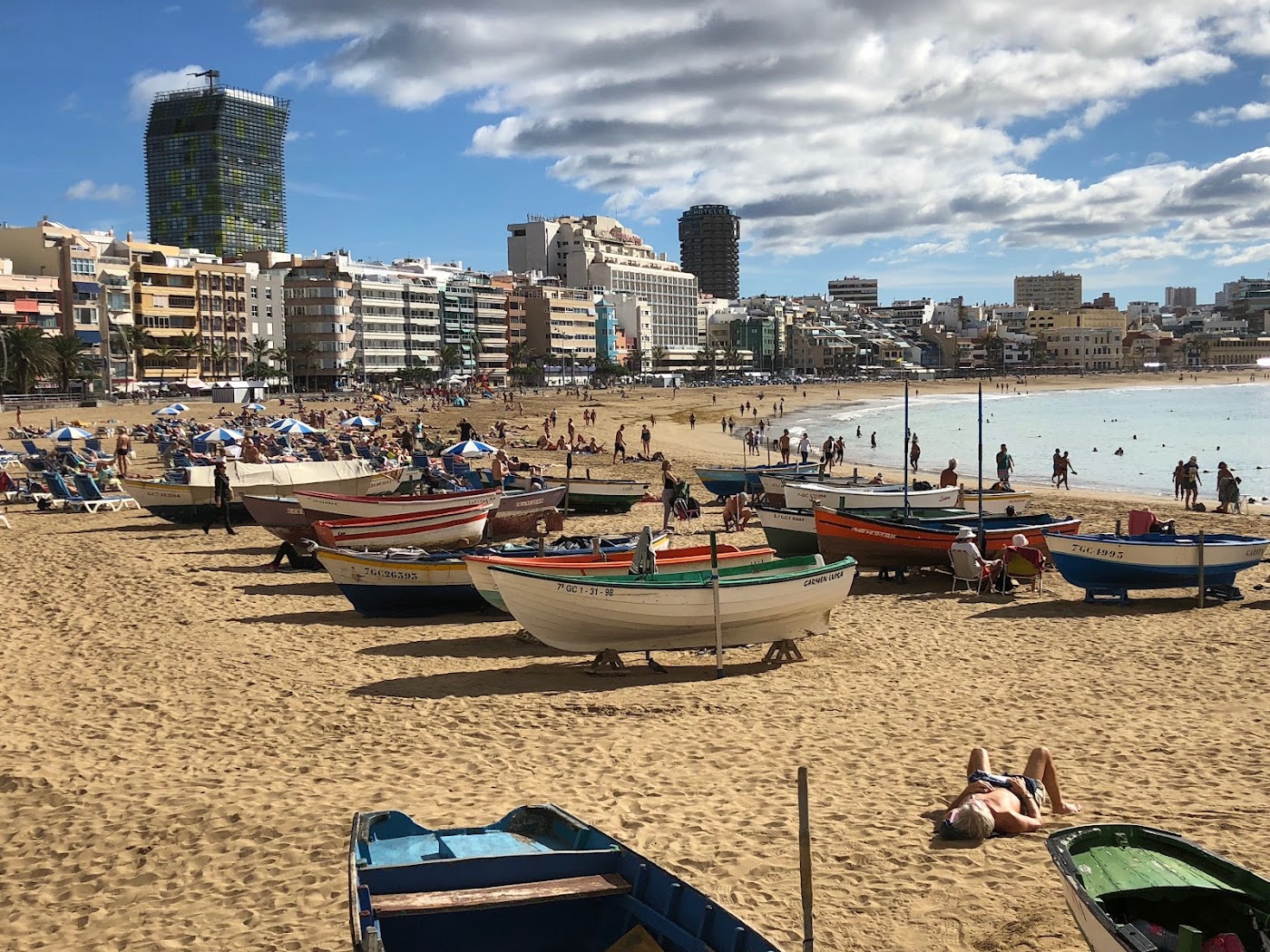
Las Canteras is one of the great urban beaches of Europe — a 3-kilometre city beach in the heart of Las Palmas de Gran Canaria, sheltered by a natural underwater reef that creates calm, safe swimming conditions year-round. The Paseo de Las Canteras promenade behind it is lined with restaurants, surf shops, and ice cream sellers, and the beach draws a magnificent cross-section of Las Palmas life on any given afternoon. If you are using Las Palmas as a base — and you should consider it — this is your beach. Consistently warmer and calmer than anything you will find in northern Europe.
Playa de Nogales
La Palma — the greenest and steepest of the main Canary Islands — does not do beaches in the Fuerteventura sense. What it does have are small, dramatic coves like Nogales: black volcanic sand at the foot of high green cliffs, with good snorkelling in the rocky outcrops at either end of the bay. Access is via a steep 20-minute path from the clifftop car park. There are no sun beds, no chiringuitos, and on most days very few other people. This is the beach you go to when you want to feel properly away from it all.
Browse hotels across all the Canary Islands on Booking.com — filter by island and area, with free cancellation on most properties.
Practical Notes
Swim flags: All managed beaches in the Canaries use the standard EU flag system — green (safe), yellow (caution), red (no swimming). This applies to El Hierro and La Palma beaches too. If there is no flag, treat the water with caution.
Sun: Despite being in the Atlantic, UV levels in the Canaries are routinely higher than visitors expect. Factor 50 for children, factor 30 minimum for adults. The northerly trade winds keep things feeling cool even when solar radiation is high — many people get severely burnt without realising it.
Getting there: Most of the remote beaches on this list require a hire car. For island-hopping to El Hierro or La Gomera, check our car hire guide for ferry rules and inter-island options.
See also: Hidden Gems in Tenerife and Best Things to Do in Lanzarote.