Tenerife is the largest of the Canary Islands, and most people see a fraction of it. They land in the south, find a sun lounger, and leave a week later having experienced approximately 5% of what the island offers. We are not here to judge that — sometimes a switch-off beach holiday is exactly what you need. But if you want to know what Tenerife really is: it is ancient laurisilva forests, a 3,715-metre volcano that pokes above the clouds, a perfectly preserved colonial university town, and fishing villages that somehow escaped the resort boom. Seven days, done properly, can cover all of it.
This itinerary assumes you have a hire car (essential — see our car hire guide) and a base in the north or centre of the island. If you are staying in the south resorts, the days are easily reversed.
Itinerary at a Glance
- Day 1: Arrival, La Laguna old town, first evening in Puerto de la Cruz
- Day 2: Anaga Rural Park — ancient forest, mountain villages, hidden beaches
- Day 3: Mount Teide — cable car, crater walk, sunrise from above the clouds
- Day 4: Garachico, Icod de los Vinos, Masca viewpoint
- Day 5: South coast — beaches, whale watching, Los Cristianos
- Day 6: La Orotava, botanical gardens, Loro Parque or free day
- Day 7: Slow morning, local market, departure
Day 1: Arrival & La Laguna
Most flights to Tenerife arrive at Tenerife South Airport (TFS). If you land early enough, pick up your hire car and drive north — the motorway up the spine of the island takes about 45 minutes to reach La Laguna. If you land at Tenerife North (TFN), you are already there.
San Cristóbal de La Laguna is a UNESCO World Heritage Site and the island's former capital, and it is one of those places that immediately makes you wish you had more time. The historic centre is a grid of 15th and 16th-century colonial architecture, wide pedestrianised streets, and beautiful churches — this city was the template for Spanish colonial town planning across the Americas. Wander the Calle Herradores, look into the Catedral, and find a table at any of the university-town cafés for a coffee and a slice of bienmesabe almond cream cake.
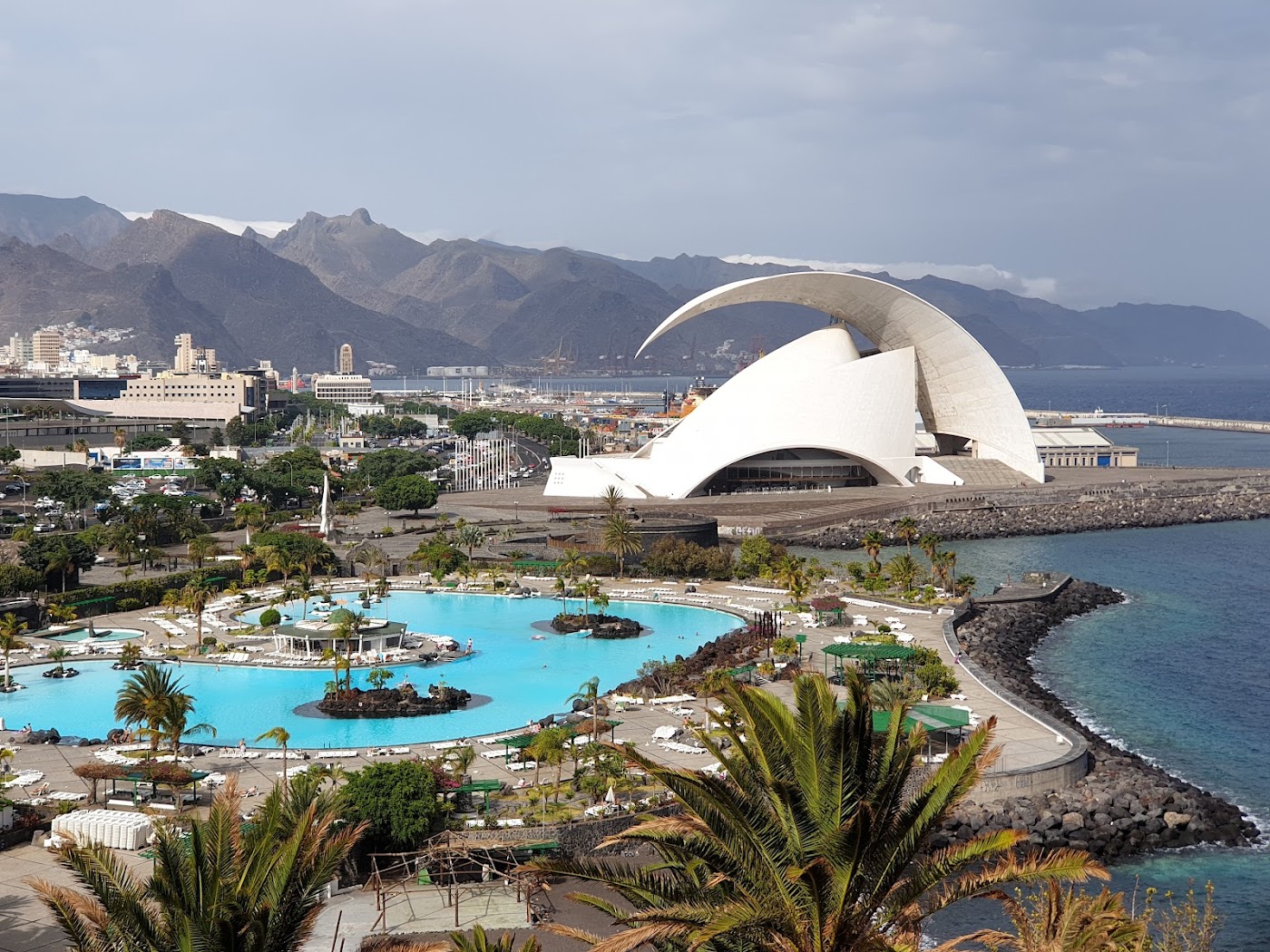
In the evening, drive down to Puerto de la Cruz — the north's main town and a much better base than the south resorts if you want to explore the whole island. The Lago Martianez, a series of seawater swimming pools designed by local artist César Manrique, is a 10-minute walk from most hotels and one of the most architecturally striking places on the island. Book dinner at one of the seafood restaurants along the Playa Jardín seafront — the lapas (grilled limpets with garlic butter) are mandatory.
Day 2: Anaga Rural Park
Set your alarm early. The Anaga Peninsula in the northeast corner of Tenerife is one of the oldest and most biologically diverse places in the Canary Islands — a UNESCO Biosphere Reserve of ancient laurisilva forest, dragon trees, and villages so remote that they were only recently connected to the road network. It deserves a full day.
Start at the Mirador Cruz del Carmen, where a visitor centre explains the geology and ecology of the park over a morning coffee. From here, take the trail north into the cloud forest — the PR-TF 3 to Punta del Hidalgo is one of the most beautiful walks on the island, through ancient heather trees draped in moss, with the Atlantic glinting far below through the canopy. The full route is about 14 kilometres each way, so pick your distance according to your fitness and time.
For lunch, drop down to Taganana — a tiny village on the north coast accessible via one of the most vertiginous roads in the Canaries. The descent alone is worth the experience, and the village has a handful of small bars serving local wine and grilled fish. The beach below Taganana is black volcanic sand, dramatically set between cliffs. On the way back, stop at the Mirador de Jardina for views over La Laguna and the caldera basin.
Day 3: Mount Teide
This is the day most people remember. Mount Teide is the highest point in Spain, the third-largest volcanic structure on Earth from its ocean base, and the centrepiece of a National Park that receives more visitors per year than Yellowstone. It deserves both the reverence and the early start.
Leave your accommodation by 7am. The drive up through the Las Cañadas caldera — the ancient collapsed crater that surrounds Teide's base — is extraordinary as the light builds: orange and red volcanic rock, the strange lunar landscape of the malpais, and the conical peak rising above it all. Arrive at the Parador de las Cañadas del Teide before the tour buses, and walk the crater floor trails while it is still quiet.
The Teide cable car (Teleférico del Teide) runs from about 3,500m to 3,550m — a short but spectacular ride. Book online in advance; in high season they sell out days ahead. Walking to the actual summit crater (the last 163 metres) requires a separate free permit from the Spanish national parks system, which you must also book online well in advance. The views from any point above 3,000m are, on a clear day, extraordinary — you can see Gran Canaria, La Palma, La Gomera, and El Hierro simultaneously.
Come back down via the TF-38 through Vilaflor, the highest village in Spain at 1,400m, stopping for lunch at one of the village restaurants. The road winds through pine forests with an intoxicating resin scent. Back at base by late afternoon.
Day 4: Garachico, Icod & Masca
The northwest corner of Tenerife is where the island's history is written in volcanic rock. The town of Garachico was once the most important port in the Canaries, until a volcanic eruption in 1706 destroyed much of it and permanently sealed the harbour. What the lava left behind was extraordinary: a coastline of wild black rock with natural swimming pools carved into it, and a town that rebuilt itself with what survived. The El Caletón rock pools are one of the most beautiful swimming spots in Tenerife — go early before crowds arrive.
From Garachico, drive 10 minutes east to Icod de los Vinos, home to El Drago Milenario — a dragon tree (Dracaena draco) estimated to be between 800 and 1,000 years old. It is genuinely impressive, particularly if you catch the morning light on the red sap that gives the tree its name. Icod itself has a pretty colonial church square worth a slow coffee.
In the afternoon, drive south on the TF-82 towards Masca. The village is famous for the gorge walk down to the sea (a serious 3–4 hour hike requiring a boat return — book in advance), but even if you do not walk, the mirador above Masca with its view over the towering barranco walls and the ocean far below is one of the most dramatic viewpoints on the island. The road to get there is extremely narrow and winding — drive slowly, use your horn on blind bends, and enjoy it.
Day 5: South Coast & Whale Watching
Time to see the other side of the island. The south of Tenerife — Playa de las Américas, Los Cristianos, Costa Adeje — is everything the north is not: sun-soaked, tourist-oriented, and built for beach holidays. That is not a criticism. The beaches in this area are genuinely excellent, the sea is calmer and warmer than the north, and the resort infrastructure is slick.
Start the day with a whale watching boat trip from Los Cristianos or Los Gigantes. The waters off the southwest coast of Tenerife host one of the world's most reliable resident populations of pilot whales and bottlenose dolphins, supplemented by seasonal sperm whales, fin whales, and occasionally blue whales. A two-hour trip costs around €30–40 per person and has a very high success rate year-round. Go with a certified responsible operator — look for those displaying the Tenerife Whale and Dolphin Watch certification.
After lunch in Los Cristianos (try the market street behind the waterfront for local rather than tourist food), drive north up the coast past the dramatic Los Gigantes cliffs — 600-metre vertical rock faces dropping directly into the sea, which you can view from above or from the water. Spend the late afternoon on Playa de la Arena, a sheltered black sand beach just north of Los Gigantes that is one of our favourites on the island — calm water, good facilities, and far less crowded than the big resort beaches.
Book a guided tour of Tenerife
Whale watching, Teide hikes, Anaga forest walks and more — led by guides who know this island inside out.
See Tenerife ToursDay 6: La Orotava & The Orotava Valley
La Orotava is one of the most beautiful towns in the Canary Islands, full stop. Perched on the slopes above Puerto de la Cruz with Teide as its backdrop, it has one of the finest collections of traditional Canarian architecture anywhere — the Casa de los Balcones alone, with its carved wooden balconies and inner courtyard, is worth visiting. The town's historic centre takes half a day to explore properly: the Baroque church of the Concepción, the artisan workshops, the municipal garden (Parque del Hijuela) with its century-old dragon trees.
If you are visiting in late May or June, La Orotava is famous for its Corpus Christi celebrations — the town creates extraordinary street carpets from volcanic sand and flower petals, which are among the most beautiful folk art displays in Spain. Outside of Corpus season, the Casas de los Balcones hosts a permanent exhibition of the carpet-making process.
In the afternoon, drop down to the Puerto de la Cruz Botanical Gardens (Jardín de Aclimatación de La Orotava), one of the oldest botanical gardens in Spain, established in 1788. It is small but genuinely lovely, with a remarkable collection of tropical trees including a massive fig tree said to be one of the largest in Europe. Entry is just €3.
This is also a good day to simply slow down. Sit in the main square of La Orotava with a coffee. Walk along the Puerto de la Cruz seafront at golden hour. Let the itinerary breathe. Seven days on Tenerife should include at least one afternoon with nothing scheduled — and Day 6 is the natural candidate.
Day 7: Market Morning & Departure
Save the final morning for the local market. The Mercado Municipal de Puerto de la Cruz runs daily and is one of the more authentic produce markets on the island — local tomatoes, avocados, bananas smaller and sweeter than anything you have had before, local cheeses, and the odd artisan stall. Stock up on whatever you can carry home: a jar of mojo rojo, some Tenerife goat's cheese, local wine from the Orotava Valley.
If your flight is in the afternoon, a final coffee in La Laguna on the way to the airport is a fitting goodbye. The university town hums with a different energy at 10am — students, academics, locals doing their shopping. A good reminder that Tenerife is a place where people actually live, not just a backdrop for holidays.
Practical Notes
Base: We recommend staying in the north (Puerto de la Cruz or La Orotava area) for this itinerary. The north is better connected to Anaga, La Laguna, and Teide, and the towns themselves are far more characterful than the south resort zones.
Teide permits: Book the summit walk permit at reservasparquesnacionales.es well in advance — they are free but very limited. The cable car also sells out; book at the Teide website directly.
Driving time: Allow more time than Google Maps suggests on mountain roads. The TF-82 to Masca, in particular, takes much longer than its distance implies. Factor in a 30–40% buffer on mountain route estimates.
Food budget: Lunch at a local bar (€10–15 per person for a three-course menú del día including wine) is one of the best value meals in Europe. Avoid anything described as "tourist menu" on laminated boards — walk two streets back from the seafront and you will find the real thing.
We recommend booking through Booking.com — best price guarantee and free cancellation on most hotels across Tenerife.